Maria Cabildo - East LA Community Corporation
Building neighborhood stability through community organizing and real estate development
Listen to an audio clip from Maria’s story:
I had serious angst about my future from the time I was little. I couldn’t imagine what it would be. In the neighborhood where I grew up in East LA, we didn’t really have role models. When I was teaching poetry at Dolores Mission Alternative School and I asked kids what they wanted to be, they frequently said, a probation officer. That’s who they saw.
I was in junior high when my brother graduated from high school. He was applying to colleges, and I was fascinated by the process. He applied to an urban planning program in Indiana. I was like, oh my god, what’s that? I’ve never heard of an urban planner! In that moment, it’s like the sun came out. All these things clicked in my 13-year-old brain. The freeways that are everywhere on the east side, with only a chain-link fence separating the community and the speeding cars. No parks nearby. Suddenly everything flashed in front of me -- all of this is planned! Hope clicked, too -- well, you could just plan it different.
They talk about how immigrants are more hopeful than American-born folks, right? I don’t know if that’s an immigrant story, but maybe it was my father’s hope. He was determined that we would all go to college. My brother set me on a course of interest in urban planning -- of wanting to influence the built environment so that it was welcoming, safe, had green space, and beautiful buildings that were not run down and deteriorated. But I think it goes back to my father. He was a community board member at the free clinic, and I saw him volunteer there. He also was famously the President of El Club de Madres, which is the mothers’ club at my elementary school. A man was the president of the mother’s club?!? And he was a tailor.
I thought, how does he find time? But he did, so giving back to the community was normalized in my life. I remember one year I accompanied him as he delivered toys for Christmas all through the neighborhood. We didn’t have any toys, but we were delivering toys. So I learned, even if you have very little, you find ways to give back.
My father was incredibly proud of being a master tailor in Beverly Hills. And he was incredibly proud of his family, maybe because my mom was 17 years younger than him and she was beautiful. He loved for us to meet him where he worked. That meant a very long bus ride from what was then Brooklyn Avenue and Rowan in East LA, where we lived, to Saks Fifth Avenue in Beverly Hills. My mom couldn’t speak English, so my brother was always translating -- are we close to Beverly Hills? Are we close? I got to experience the city and the transition from the east side of Los Angeles.
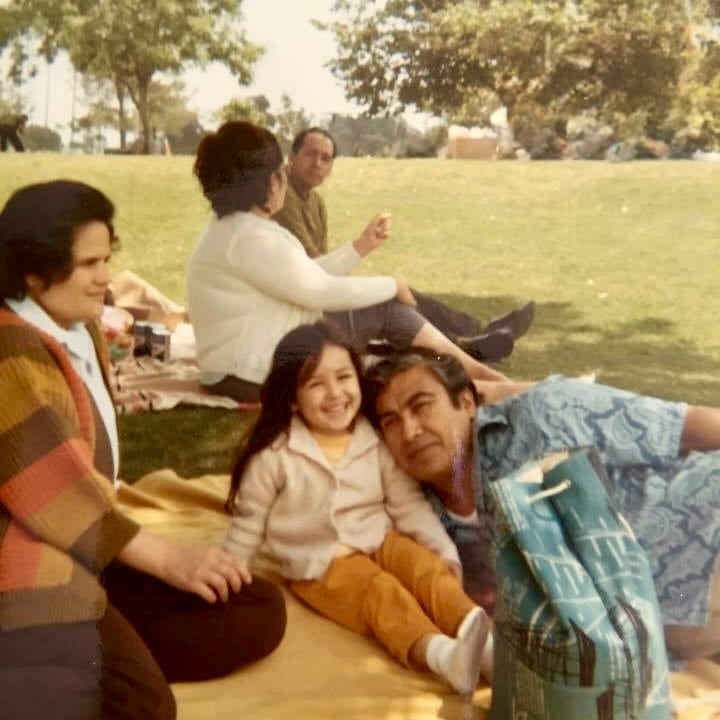
I grew up right next to Boyle Heights, literally 15 houses away from where I began my career. Boyle Heights became my love. I remember that beautiful long ride, all those old brick buildings, and switching to a bus downtown that would take you up Wilshire. Bullocks Wilshire was in its glory then, and I Magnin, and the Ambassador. I saw the contrast between complete neglect and disinvestment in East LA to something different as you headed west. I wondered, why do these places feel safer? Why are there so many trees? Why is everything kept up so well? It had a big impact on me. That’s how my interest in cities, inequality and disinvestment came about, and seeing housing as a solution.
My dad bought our house at a time when it was hard for people of color to buy. He had a predatory loan, so he worked two jobs. He had his full-time job at Saks Fifth Avenue and also worked with a tailor named Harry Cherry in Beverly Hills. He made clothing for movie stars. He used to tell a story about borrowing his boss’s little convertible to deliver suits to Walter Mattau and Yul Brenner. One of my prized possessions was a signed picture of David Cassidy from the Partridge Family. So he lived this whole other, golden era of the United States.
Around the time my brother was applying for college, all the kids from the gifted program at my junior high school were brought into the library. They told us about this place called Exeter, and that we could apply. My brother said oh, you have to apply, Marie! You have to go! He was the one who sold my dad on it. My mom is still angry about it, but that’s how it happened.
My dad had aspirations for his children, so he forced me to take judo. He thought, alright, she’s going. If anything happens, she knows how to defend herself. I haven’t practiced judo since I was 13, but I earned a brown belt.
So I went to Exeter, and talk about contrast! It was really hard, but it changed my life. I went from a world that was bordered by freeways to a whole new place. I was able to wander around and explore Boston a 14-year-old kid by myself, something I would never have done in LA.
I went from there to Columbia, and then straight on to MIT for grad school. That was the year that Nelson Mandela was freed, and the Berlin Wall came down. I could see how social movements were shaping policy and cities, and I felt that MIT’s approach to planning was too top-down; it didn’t incorporate the voices of community. So I left and came back to Los Angeles and enrolled at UCLA. I was feeling a love/hate relationship with LA, because I felt trapped in East LA.
Between my first and second year at UCLA, my friend Lakshmi invited me to visit her family in India, in Madras, which is now Chennai. My father asked, can you go to Calcutta and get me a medal from Mother Teresa? Just a little medal, like the ones you get of saints at churches in Mexico? I was like, Dad, do you realize how far Madras is from Calcutta? But it was his request if I was going to India.
So I go to Madras, and I love how different it is. It smells different. There are hardly any cars, and they all look like those taxis in London. It’s a long story, but after three months, a trip to Calcutta becomes possible. My friend and I go to Calcutta, and we look for some place that’ll sell a Mother Teresa medal. Finally we go to Mother Teresa’s ashram and we wait for Mother Teresa to arrive. She finally shows up, and we’re just in awe of this tiny lady. She shakes our hands and I’m struck by how soft they are. I thought, oh my God, she’s out there working with lepers. Why are her hands so soft? I was just awed by her presence. She said, you must come and work here. I said, okay. And then while I’m taking that in, she walks away. Suddenly I remember the medal and I run after her -- Mother Teresa, I’m sorry, but I need a medal for my father! She says something to her attendants and they give me a medal. When I bring it back to my dad, he looks at it and says, oh, that’s not what I wanted. Oh my god, dad, really?! If you knew what I went through!
During that time in India, I was really looking for answers. I visited many spiritual sites, waiting for clarity. What is my future? It was when I met Mother Teresa and she told me that I must come and work with her that I found clarity, that my place is in East LA. There is so much pain and hurting where I come from. That’s my place, and that’s how I came back to plan housing here.
My dad was so understanding. He was like, oh, you’re coming home! He never pressured me to go work in the supermarket to contribute financially to the household. He gave me the space to find something that aligned with what I was learning. So I started working with a group of friends on what would become the East LA Community Corporation. We wanted to create an organization that was deeply connected to community residents and used real estate development and community organizing as its tools for community stability and investment, based on the East side and Boyle Heights.
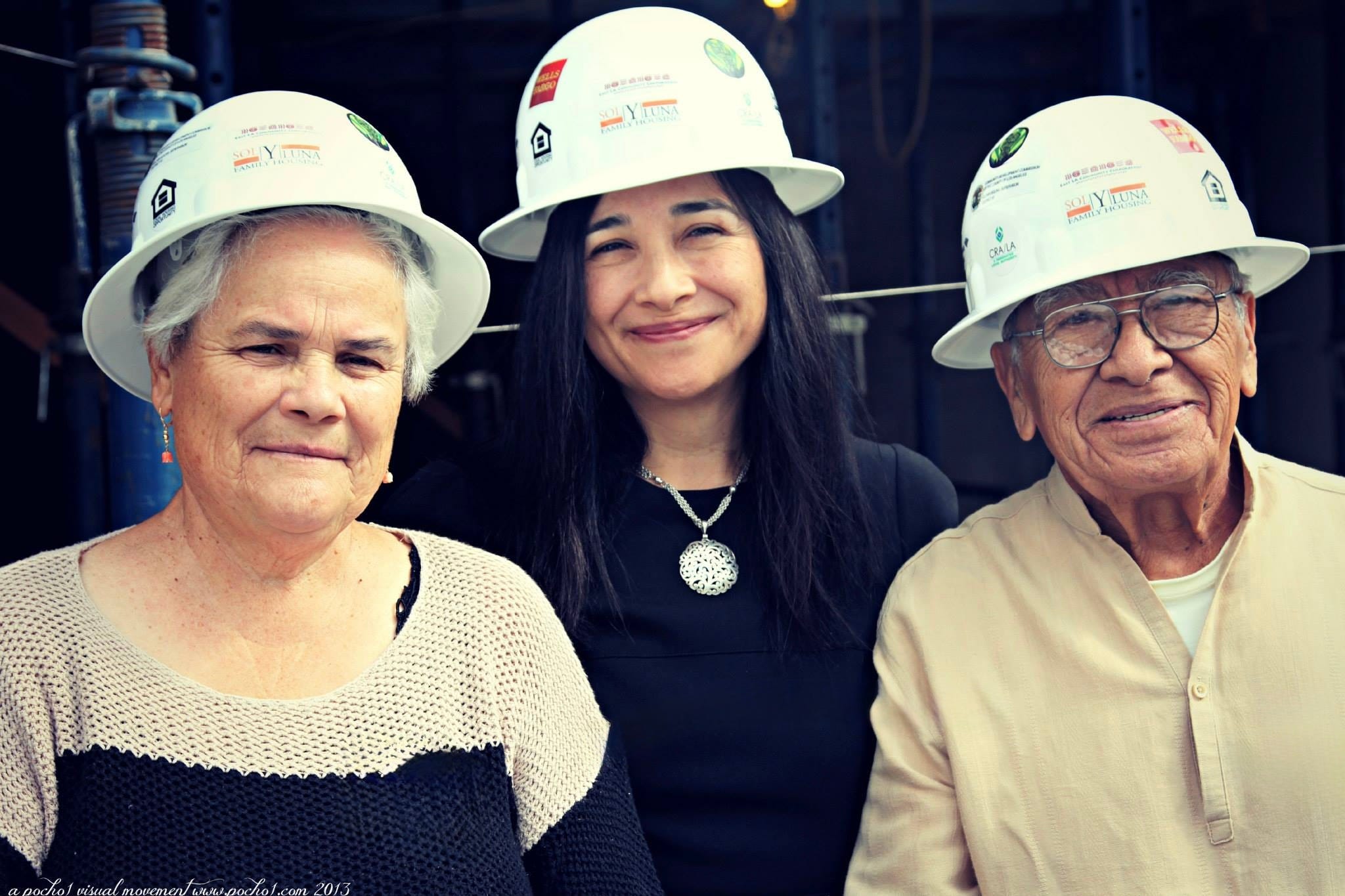
ELACC turned 30 this year, and you can see our success today. If you ride the gold line to Boyle Heights, you’re going to see a project by East LA Community Corporation at almost every stop, from Mariachi Plaza to Soto.
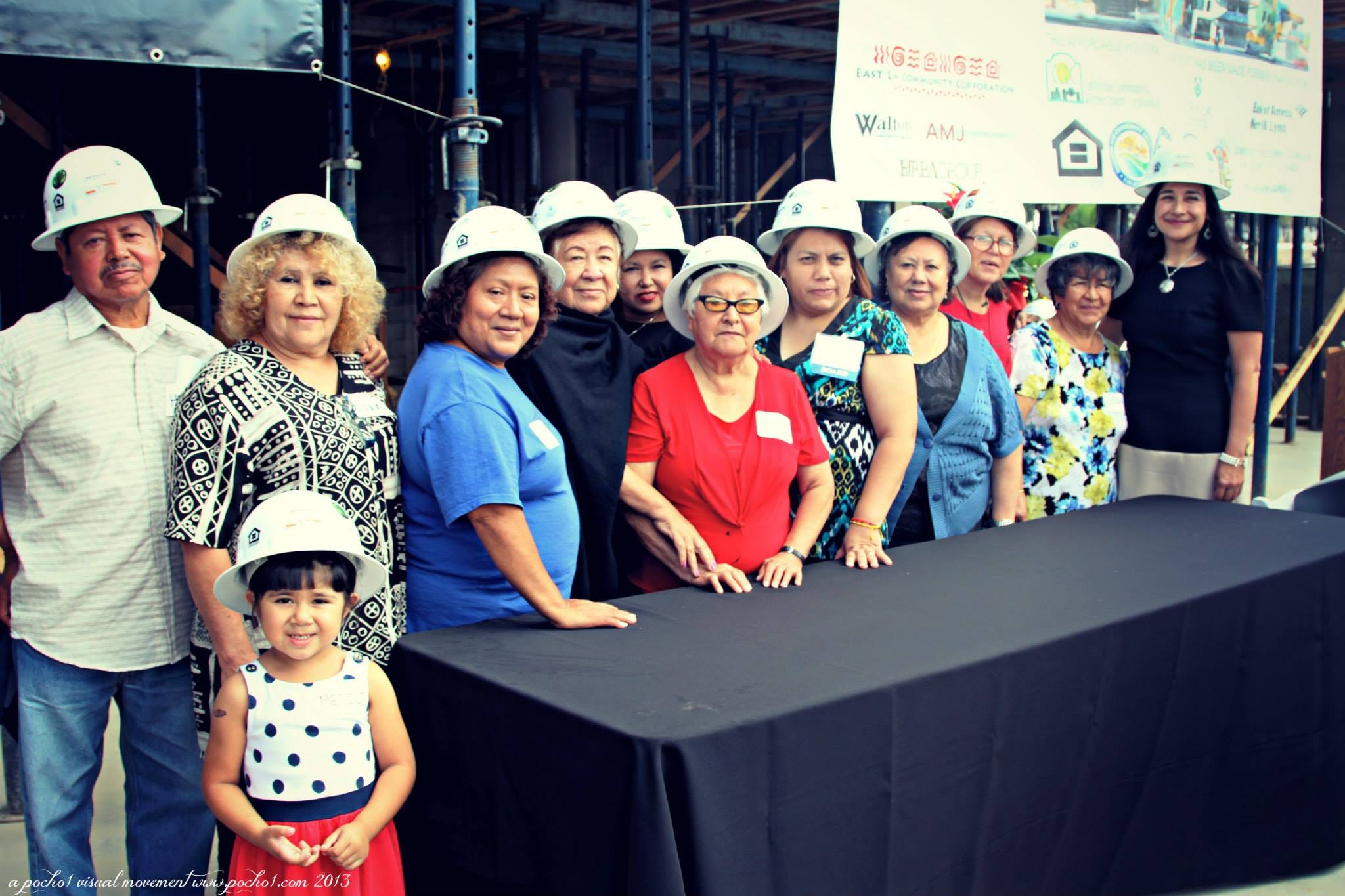
When I look back at my career, I think I could have been effective without being so tough. I was in full armor, fighting for the east side. We had to go through a lot of NIMBY fights, and we got a lot of hate mail. I didn’t think about the consequences of bridge burning. But eventually I realized that carrying all that armor wears on you, and it hurts to always be that intense. I learned to help people tap into their own power. I became less scattershot, and more focused.
I also learned how to deal with imposter syndrome, which is especially real for leaders of color and women. I spent a lot of my life saying, I’m so lucky. I got to go to Exeter, I got to go to an Ivy League school, I got to get ELACC off the ground. But in my forties, I realized it wasn’t luck. It was hard work. I worked really hard, and I did okay. Maybe luck was recognizing an opportunity and pursuing it. But everything else was work.
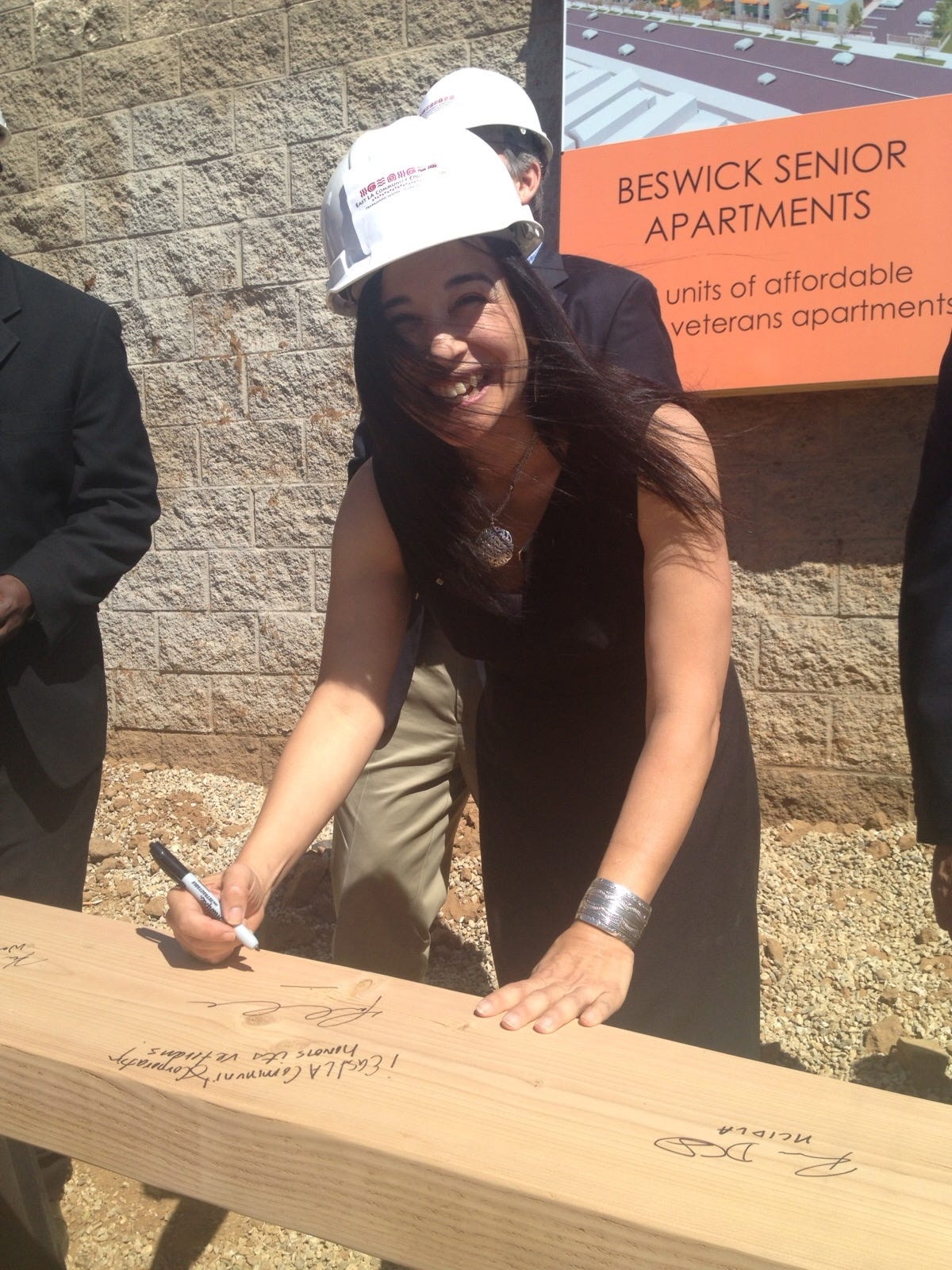
When I began my career, we thought we could end homelessness with housing. But these are multi-generational problems, and our job is just to take it as far as we can. We’re like cathedral builders; we may not live long enough to see the finished product. What I am doing now is helping build up the folks who are going to pick it up after us.
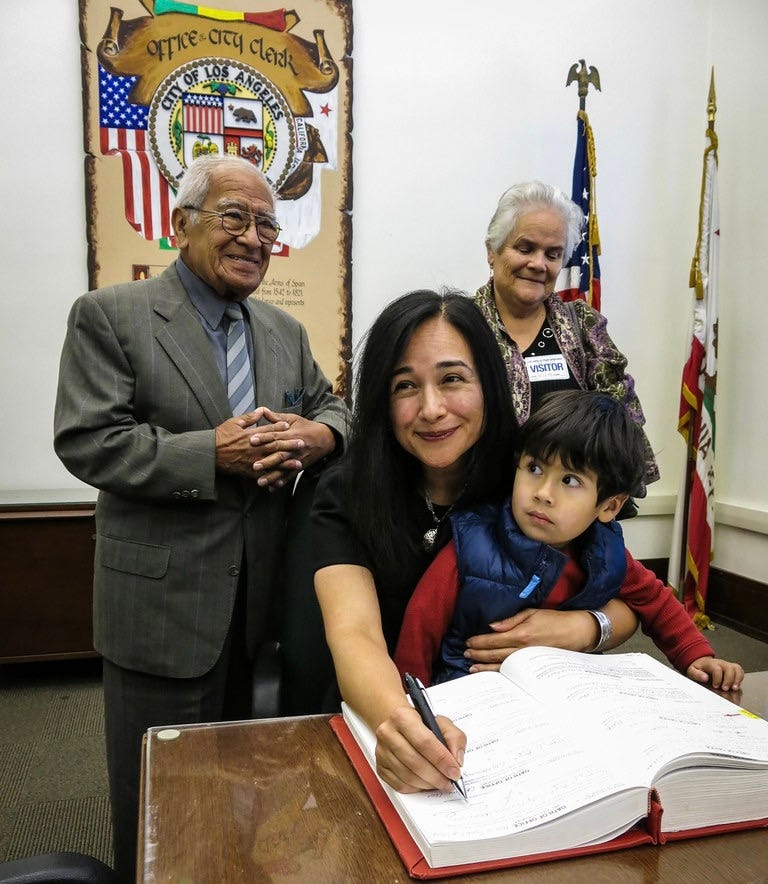
It’s not my journey anymore, and that’s okay. I feel blessed that I’m sought out by young leaders. They’re so smart and committed. I’ve got a lot to learn from them. I tell them, go change the world! But don’t lose the connection with your kids, with your family. There’s only one first day of kindergarten. Take that time. Take vacations. You can leave work, and things aren’t going to fall apart. And if they do, you’ll learn a valuable lesson about how to shore things up.
It’s dark right now, but I’m hardwired for hope. Things can change, everything’s possible. I think it’s my dad.
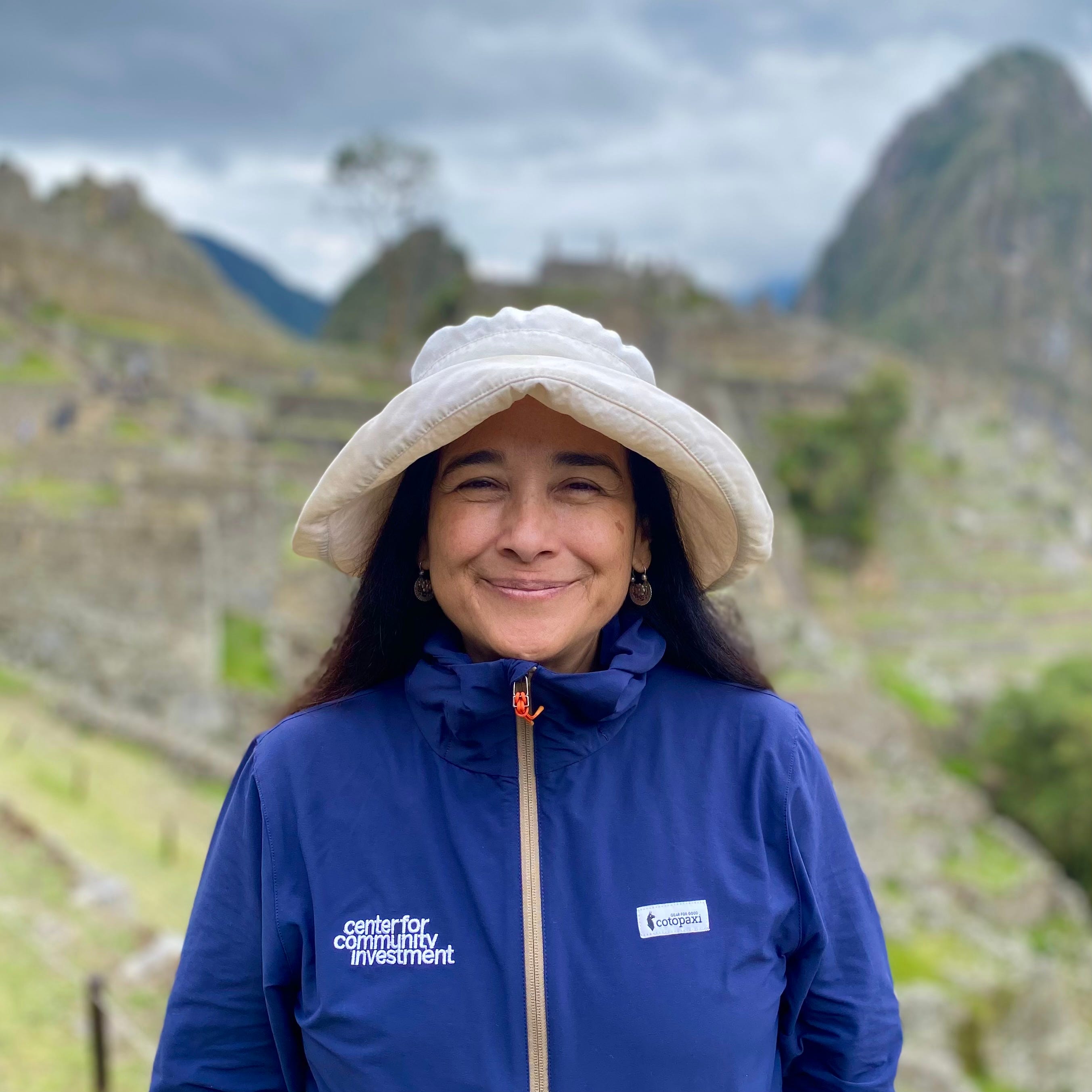
Maria Cabildo is a lifelong Angelena. Born and raised in East Los Angeles, she has a long career of public service. She has held positions in the philanthropic, nonprofit, private and government sectors. She is the co-founder of the East LA Angeles Community Corporation, and served as its President and CEO for 15 years, from 1999-2015. She was a Loeb Fellow at the Harvard School Graduate School of Design in 2019. She is currently the CEO of the Durfee Foundation.
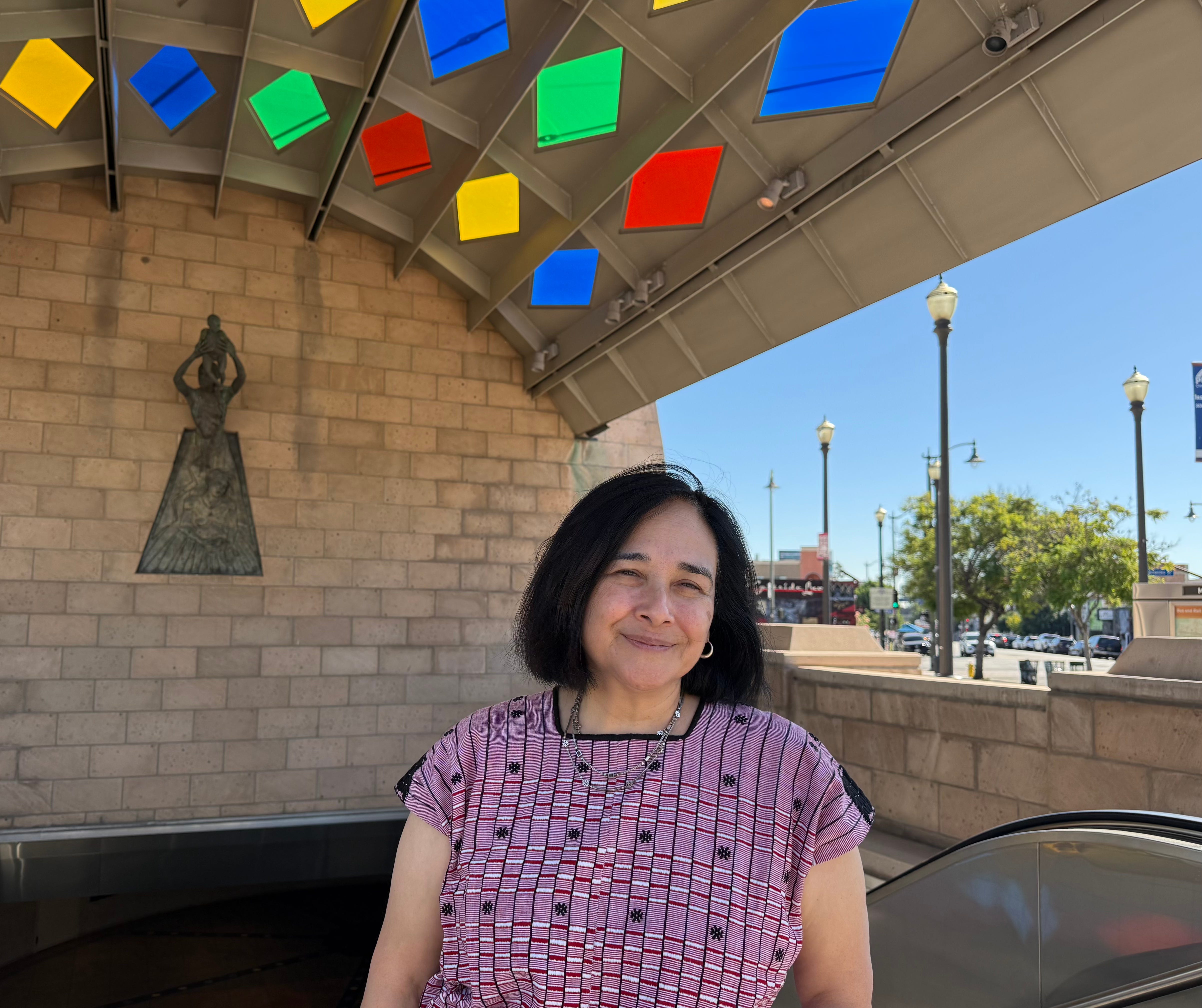
I photographed Maria, for the top of this story, at the Boyle Heights Metro station. We met that morning at La Monarca, a coffeeshop located on the ground floor of the Boyle Hotel, across the street from Mariachi Plaza. Maria led the successful campaign to transform the historic hotel, which had fallen into disrepair. It was adapted to include 51 units of affordable housing units for the local community. The hotel also houses the Mariachi Cultural Center and rehearsal rooms for musicians. It is a crown jewel in the neighborhood, and an exemplar of Maria’s contributions to East Los Angeles.
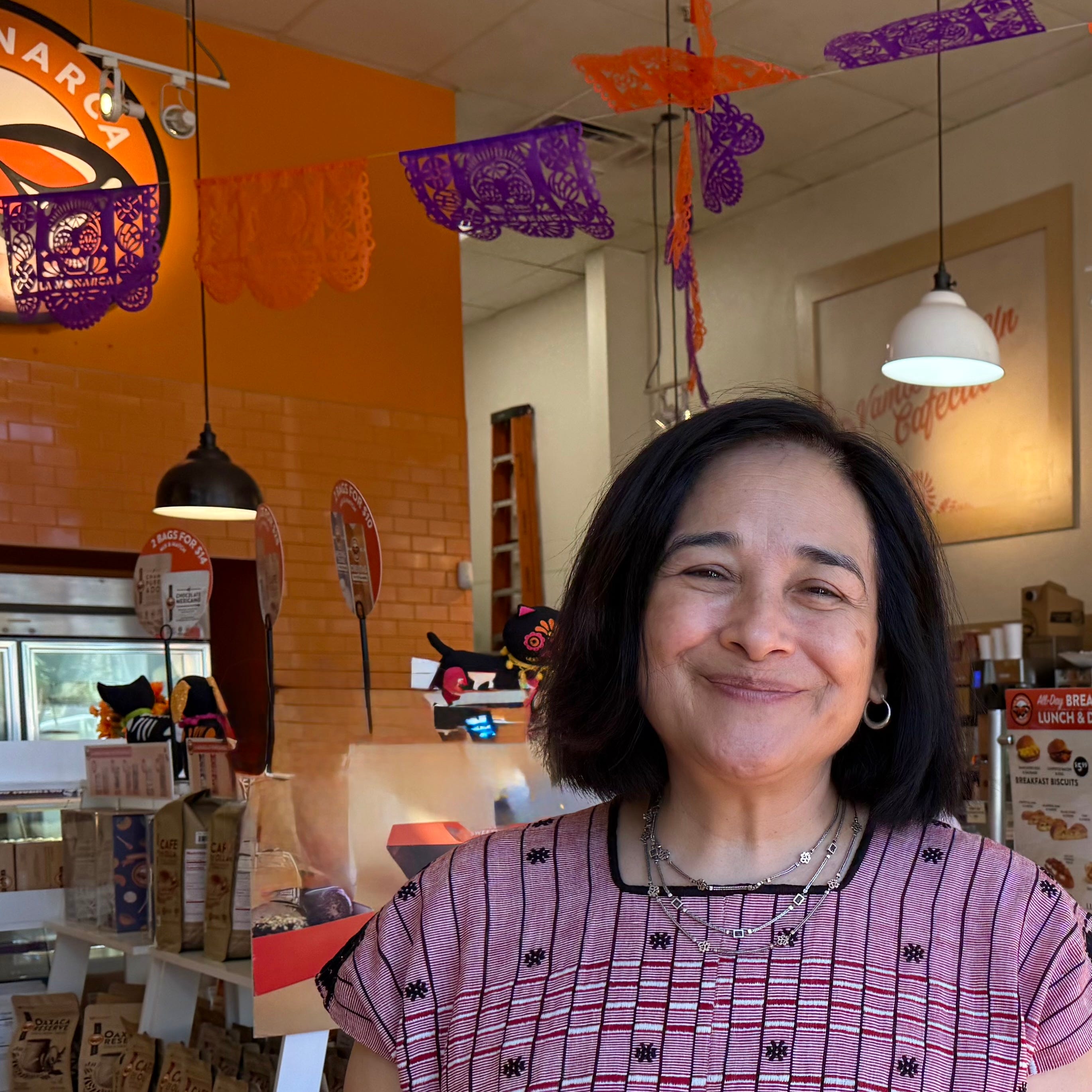
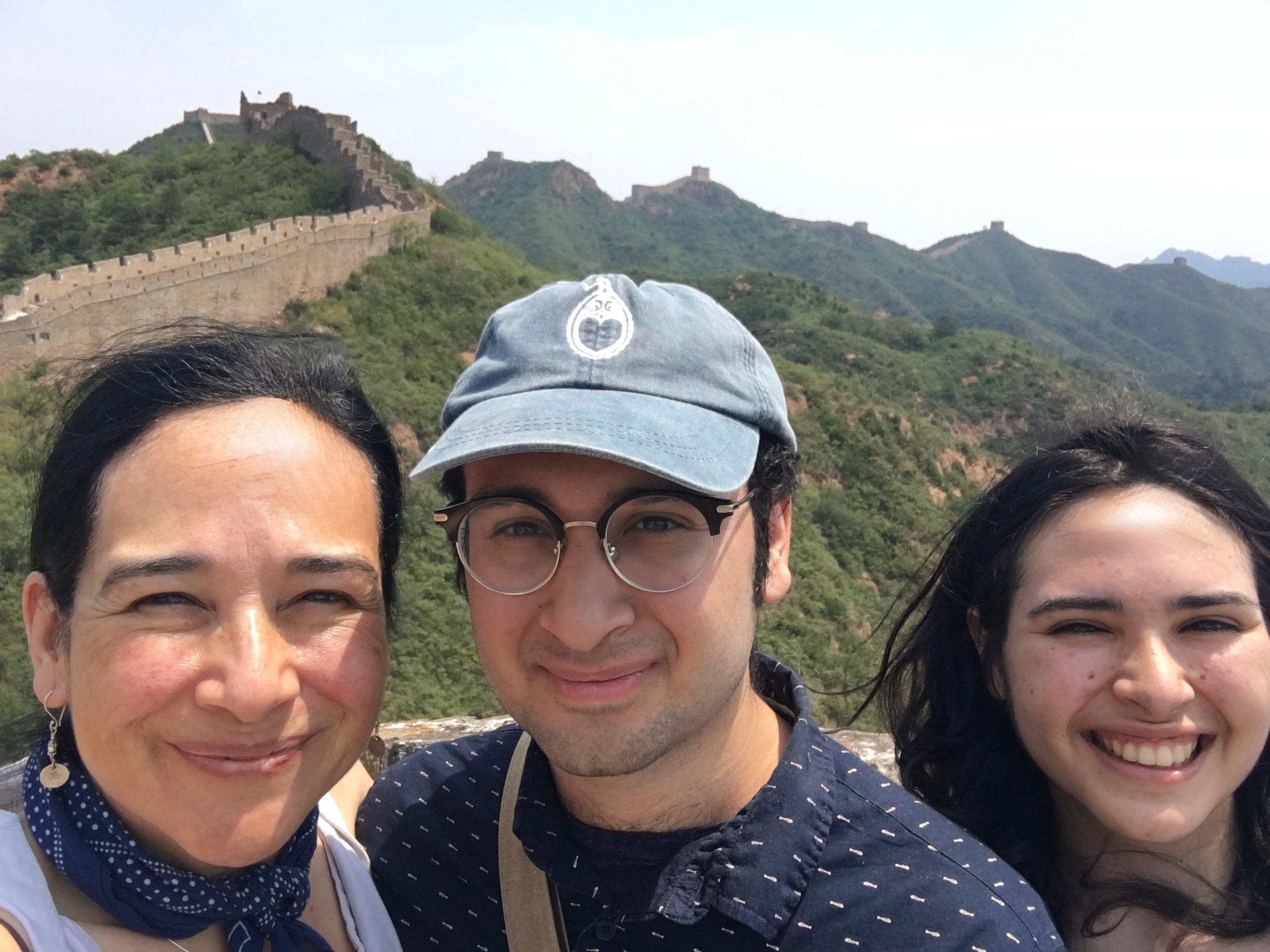
One of the things I love best about Maria is her love of exploring, often with her kids, Lulu and Joaquin. She has hiked the Milford Track in New Zealand and the Camino de Santiago in Spain, Machu Picchu in Peru and the Great Wall of China. Her travels have taken her to Japan, Rwanda and many other countries around the globe. Next up: Uluru, a sacred site for the aboriginal people of Australia.